
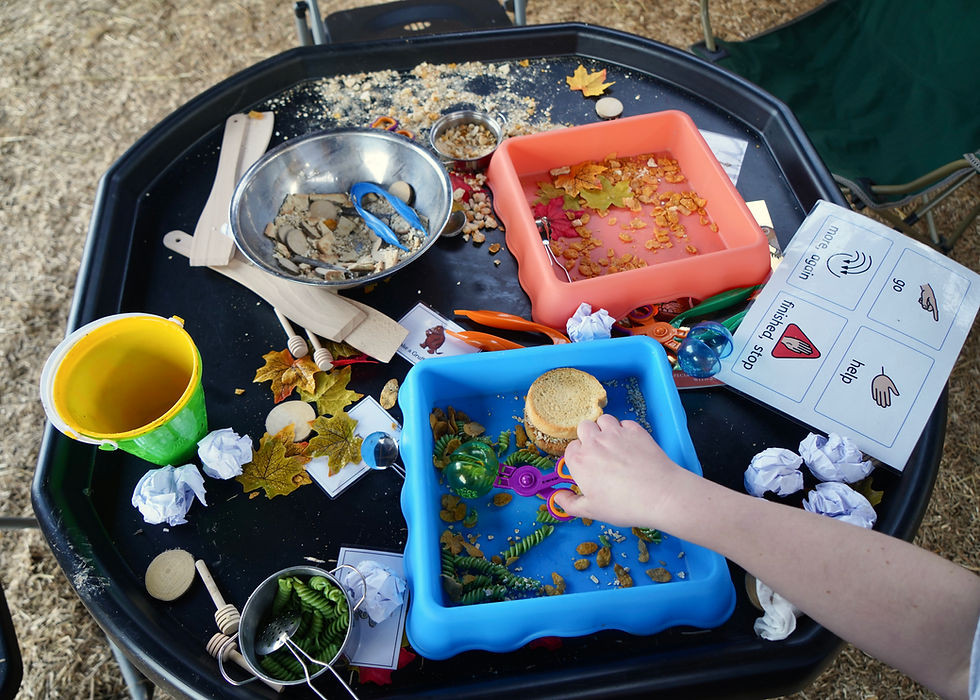
Sensory Processing
Understanding how your or your child's sensory world affects everyday life
Sensory processing is the way our brain receives and organises information from our senses. For many, this happens automatically, but for some, processing these signals can be a source of significant challenge and overwhelm.
Who can sensory-focused OT support?
We support children and adults with neurodivergent profiles, including Autism, ADHD, and Sensory Processing Disorder, as well as those experiencing sensory changes due to life transitions.
Sensory needs and the environment
The spaces we live and work in can either support or hinder our sensory regulation. We analyze environments to create optimal conditions for focus and comfort.
What is sensory processing?
It is the process of the brain taking in information through our senses, interpreting it, and making a response. When this system is efficient, we can navigate the world with ease.
How can Occupational
Therapy help?
Occupational Therapy provides the tools to bridge the gap between sensory challenges and daily participation.
- Workshops for parents and caregivers.
- School staff training on sensory inclusive environments.
- Clinical observations and assessments
- Intervention sessions in an environment that suits the indvidual
- Supporting workplace adjustments.
- Contributing to EHCPs and healthcare plans.
- Developing personalised sensory toolkits.
- Emotional regulation tools and sensory kits.


Sensory Integration
Sensory Integration and Specialist Sensory Approaches
Our Occupational Therapists offer individualised sensory-based interventions to support children's sensory processing, self-regulation, emotional wellbeing and participation in everyday activities.
Depending on the child's individual needs, therapeutic goals, and each Occupational Therapist's training and availability, approaches may include:
-
Sensory Integration: Individualised sensory-based therapeutic activities and strategies to support sensory processing, body awareness, movement, regulation and participation in everyday occupations.
-
Therapeutic Listening: A sound-based intervention that may be incorporated into an individualised therapeutic programme to support sensory processing and regulation, where appropriate.
-
EcoSensory Therapy: A nature-based therapeutic model that uses the natural environment as a therapeutic and regulating medium. The model incorporates sensory and relational experiences to support children's developmental, emotional, physical and behavioural needs.
Interventions are selected according to each child's individual profile, assessment findings and functional goals. The availability of specialist approaches is subject to each Occupational Therapist's individual training, competence and availability.
